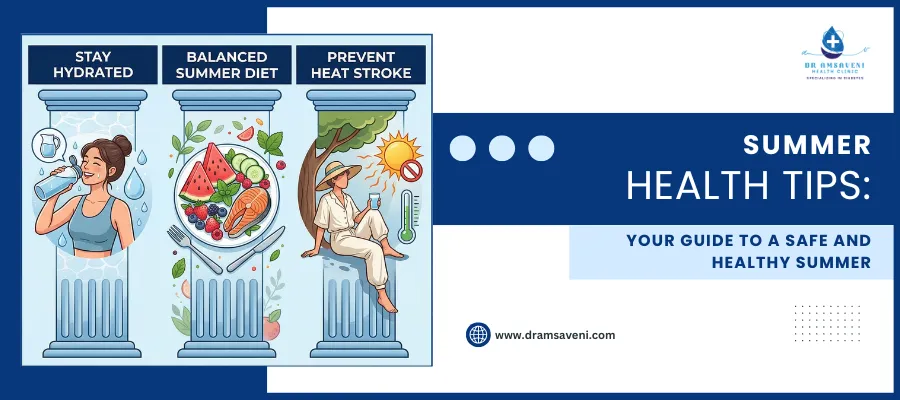
Summer Health Tips: Beat the Heat Smartly This Season
Effective summer health tips are more important now than ever as temperatures cross 40°C across our region, the risk of heat stroke, dehydration, and body heat-related illness is at its peak. Most people wait until they feel sick to take action. This guide is about staying ahead of the heat, not just surviving it.
What makes this guide different is that summer is not treated as a problem here. It is treated as an opportunity. The right habits during summer can lead to natural weight loss, stronger immunity, and better sleep if approached with the right knowledge.
Whether you want to stay cool during summer, manage blood sugar using seasonal fruits, or learn practical ways to prevent heat stroke, this guide gives you everything you need to stay healthy and safe throughout the season.
Why Summer Is Actually Good for Your Health
Before focusing on what to avoid, it is worth understanding what summer offers your body naturally and for free.
1. Your Natural Weight Loss Window
Summer reduces appetite. The body naturally craves lighter and cooler foods when it is hot. Heavy carbohydrates and fried snacks become unappealing. This is not something to fight, it is a window to use.
By switching to fruits, curd, and hydrating vegetables during this period, healthy weight loss is achieved without the effort of a structured diet.
Appetite loss in summer is the body’s way of reducing the internal heat generated by digestion. Working with this instead of against it is one of the smartest summer health tips available.
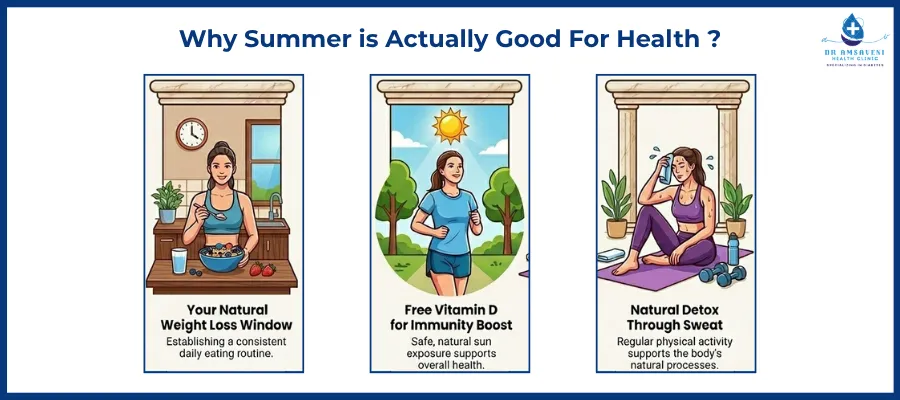
2. Free Vitamin D for Immunity Boost
Sunlight provides Vitamin D at no cost. Strong bones, better calcium absorption, improved immunity, and a more stable mood are all connected to adequate Vitamin D.
The recommended exposure is 15 to 20 minutes of morning sun before 10am. This simple habit contributes to long term immunity improvement.
3. Natural Detox Through Sweat
Sweating is the body’s built in detox mechanism. Toxins are expelled through the skin when the body heats up.
However, sweat also carries sodium and potassium out of the body. This is why plain water alone is not sufficient.
ORS, buttermilk, or lemon water with a pinch of salt should be used to replace what is lost. This is a key detail often missed in general summer health tips.
Critical Summer Health Risks and What to Do
What Are the Signs of Heat Stroke
Heat stroke is a medical emergency that can develop suddenly. Understanding its signs is important because the time available to act is very limited.
Signs include confusion, disorientation, hot and dry skin without sweating, rapid pulse, body temperature above 40°C, and in severe cases, loss of consciousness.
If heat stroke is suspected, move the person to shade immediately. Apply cool water or ice packs to the neck, armpits, and groin, and seek medical help without delay. Do not give water to an unconscious person.
Prevention is simple. Avoid going outdoors between 11am and 3pm. If travel is unavoidable, wear a full helmet while riding a two wheeler to reduce direct heat exposure to the head.
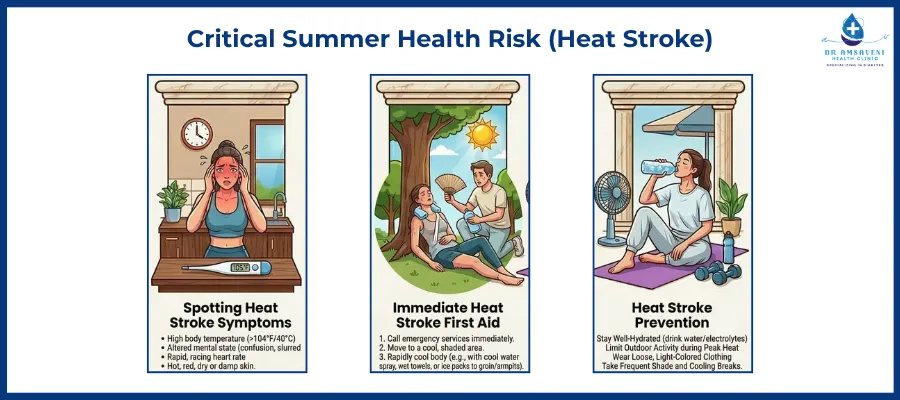
Heat Stroke Prevention Checklist
- Avoid going outdoors between 11am and 3pm
- Wear a helmet when riding two wheelers in peak hours
- Keep ORS sachets at home and in your vehicle
- Check on elderly family members and children every 2 hours
- Do not leave children or pets in parked vehicles
How to Stay Hydrated
Staying hydrated is not only about drinking water, but also about drinking at the right time and choosing the right fluids. By the time you feel thirsty, the body is already mildly dehydrated.
Aim for 8 to 10 glasses of water daily and increase intake during outdoor activity. Replace at least one tea or coffee with lemon water, buttermilk, or tender coconut water.
Avoid packaged fruit juices, sodas, and energy drinks as they can increase dehydration. Using a clay pot for storing water provides natural cooling and improves water intake.
After exercise or heavy outdoor activity, ORS is more effective than plain water as it helps restore lost electrolytes.
Body Heat and Mental Health
Increased body heat affects not only physical health but also mental well being. This connection is often ignored.
Physically, dehydration can cause mouth ulcers, burning sensation during urination, skin rashes, and headaches.
Mentally, increased body temperature can lead to irritability, mood swings, poor concentration, and disturbed sleep patterns.
These effects are common during summer and are not just behavioral changes. Keeping the body cool helps maintain both physical and mental balance.
6 Smart Summer Health Habits to Start Today
Wear loose, light coloured cotton: Polyester and jeans trap body heat significantly. Loose cotton allows sweat to evaporate naturally, which is the body’s primary cooling system. Choose light colours that reflect sunlight rather than absorb it.
Use a clay pot for drinking water: Mann paanai water stays naturally cool without electricity and contains trace minerals. The subtle taste increases how much water is consumed, making this one of the most effective summer habits.
Control outdoor timing strictly: Morning activity before 10am and evening activity after 5pm are the safest windows. This habit alone prevents most heat related issues.
Bathe twice a day: A bath in the morning and before sleep helps reduce body temperature. A cool bath at night improves sleep quality during hot summer days.
Prioritize season specific foods: Tender coconut, nungu, cucumber, muskmelon, tomato, and curd naturally cool the body. Eat fruits whole instead of juice to retain fibre and nutrients.
Add probiotics daily: Curd and buttermilk support digestion, reduce internal heat, and restore electrolytes. Include at least one serving daily.
Summer Eating Guide
Choosing the right foods during summer helps regulate body temperature and maintain hydration. Focus on cooling foods and reduce items that increase internal heat.
| Eat More | Reduce or Avoid |
|---|---|
| Elaneer, Nungu, Naaval Pazham | Vada, bonda, fried snacks |
| Cucumber, tomato, muskmelon, watermelon | Bottle drinks, packaged juices, ice cream |
| Curd, buttermilk, ORS, lemon water with salt | Excess tea, coffee, alcohol |
| Guava, papaya, seasonal greens | Spicy, oily, heavy carbohydrate meals |
| Small frequent meals (4 to 5 times daily) | Large single meals (increase body heat) |
Summer Health Tips for Diabetes Patients
A common question is whether summer fruits like tender coconut and nungu can be consumed. The answer is yes. Diabetes is about management, not complete restriction.
The key concept is the glycemic index. It determines how quickly a food raises blood sugar. Low and medium GI foods release sugar slowly, while high GI foods can cause spikes.
Safe to Eat
- Naaval Pazham (Jamun) – Low GI, supports sugar control
- Guava – High fibre, improves digestion
- Cucumber – Hydrating, very low GI
- Tender Coconut Water – Safe in moderation
- Nungu (Ice Apple) – Cooling and safe in small portions
Limit or Avoid
- Ripe Mango – High GI, causes spikes
- Grapes – High natural sugar
- Packaged Juices – Hidden sugar, no fibre
- Flavoured Coconut Water – Added sugars
Smart Eating Tip
Combine fruits with protein like nuts, curd, or roasted chana. This slows sugar absorption and prevents sudden spikes.
Portion control is essential even for low GI foods. Consult your doctor if you have kidney-related concerns.
Final Thoughts
Summer does not have to be a season of discomfort or health issues. When managed correctly, it becomes an opportunity to improve hydration, support digestion, and strengthen overall health.
Simple habits such as choosing the right foods, staying hydrated, avoiding peak heat hours, and maintaining a balanced routine can prevent most summer related problems.
Whether you are managing general health or conditions like diabetes, the key is consistency. Small daily decisions have a significant impact over time.
Listen to your body, stay aware of early warning signs, and follow practical habits. A mindful approach to summer can help you stay active, comfortable, and healthy throughout the season.