Introduction
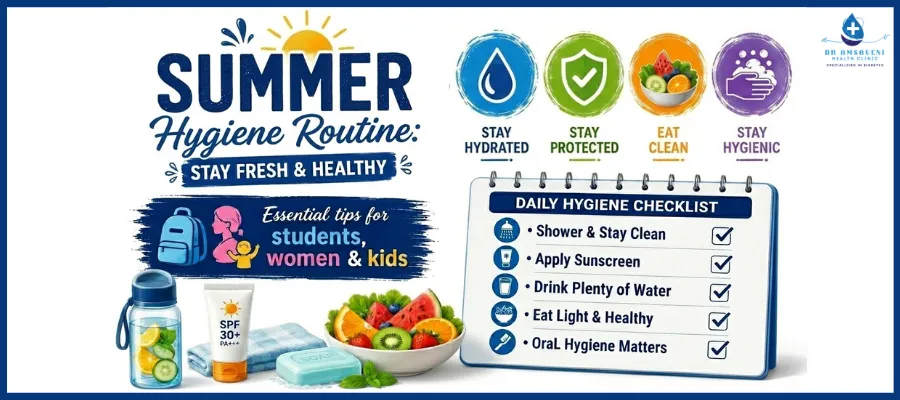
Maintaining a summer hygiene routine has become essential in 2026, as India faces record‑breaking heatwaves. The Indian Meteorological Department recently reported temperatures soaring past 47°C in Banda, Uttar Pradesh, with several states under severe heatwave alerts. Rising temperatures increase the risk of heat exhaustion, dehydration, and infections, making it crucial to adopt preventive measures.
This guide offers practical summer hygiene tips and tailored summer health tips for students, women, and kids, ensuring every age group can stay safe, comfortable, and healthy during the hottest months.
Why Summer Hygiene Matters
The summer season brings unique challenges that affect daily life. Extended exposure to high temperatures can cause dehydration, fatigue, and even heatstroke. Sweating increases susceptibility to fungal infections, while contaminated food and water raise the risk of stomach illnesses. Students commuting daily, women balancing work and family, and kids playing outdoors are especially vulnerable.A structured hygiene routine helps prevent illness, boosts confidence, and keeps energy levels stable. By focusing on hydration, cleanliness, and protective measures, you can enjoy summer without compromising your health.
Essential Summer Hygiene Tips
1. Preventing Heat Exhaustion
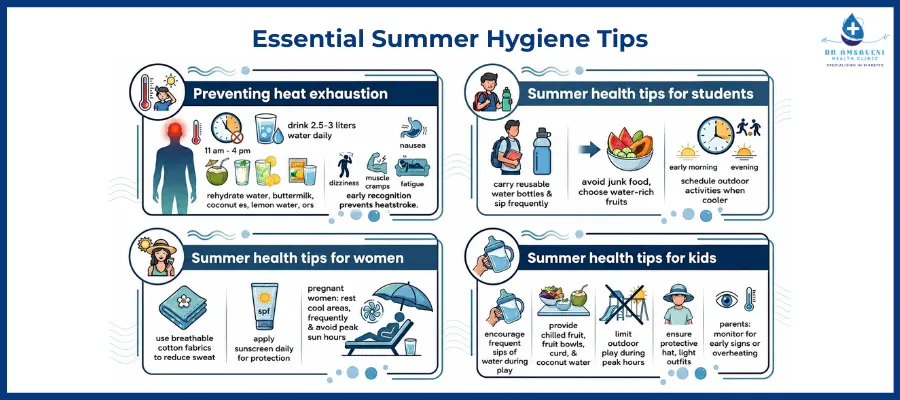
Heat exhaustion is one of the most common summer health concerns. To prevent it, drink 2.5–3 liters of water daily and avoid outdoor exposure between 11 AM – 4 PM. Rehydrate with coconut water, buttermilk, lemon water, or ORS to restore electrolytes. Watch for warning signs such as dizziness, nausea, muscle cramps, and fatigue. Early recognition and quick action can prevent progression to heatstroke.
2. Summer Health Tips for Students
Students often spend long hours in classrooms or commuting. Carry reusable water bottles and sip frequently throughout the day. Avoid junk food and instead choose fruits like watermelon, cucumber, and papaya, which are rich in water content. Schedule outdoor sports or activities in the early morning or evening when temperatures are lower.
3. Summer Health Tips for Women
Women face unique challenges during summer, from skincare to menstrual hygiene. Use breathable cotton fabrics to reduce sweat and prevent infections. Apply sunscreen daily to protect against sunburn and premature aging. Pregnant women should rest in cool areas, hydrate frequently, and avoid peak sun hours to reduce health risks.
4. Summer Health Tips for Kids
Children are more vulnerable to dehydration and sunburn. Encourage frequent sips of water during playtime and provide chilled fruit bowls, curd, and coconut water. Limit outdoor play during peak heat hours and ensure protective clothing such as hats and light cotton outfits. Parents should also monitor for early signs of fatigue or overheating.
5. Daily Routine Checklist
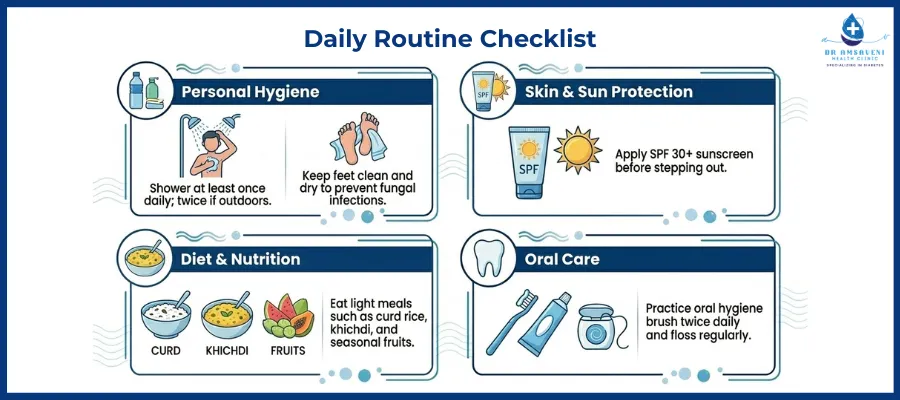
A simple checklist can make summer hygiene effortless:
- Shower at least once daily; twice if outdoors.
- Apply SPF 30+ sunscreen before stepping out.
- Keep feet clean and dry to prevent fungal infections.
- Eat light meals such as curd rice, khichdi, and seasonal fruits.
- Practice oral hygiene brush twice daily and floss regularly.
Conclusion
A well‑planned summer hygiene routine is more than just staying freshit’s about protecting your health during extreme heat. By following these summer hygiene tips and tailoring them for students, women, and kids, you can reduce the risk of heat exhaustion and enjoy the season safely. With rising temperatures in 2026, adopting these habits is not optionalit’s a necessity for a healthier, more comfortable summer.