Is Natural Weight Loss Better or Should You Choose Medication?
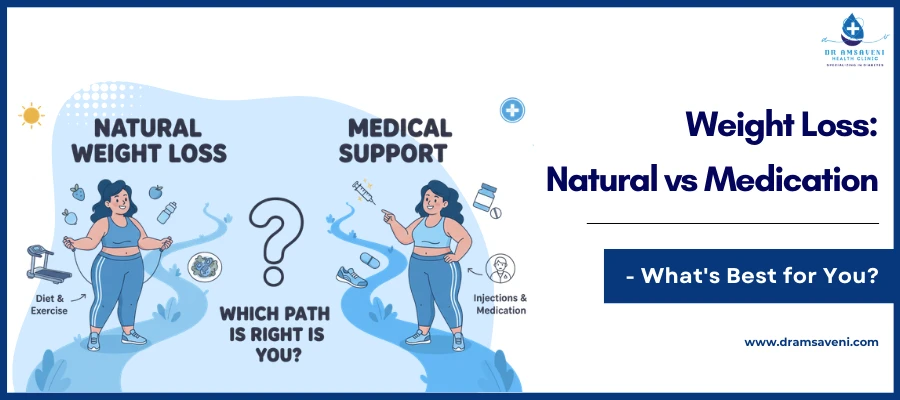
Weight loss can be achieved through natural methods like diet and exercise, or with medical support including weight loss injections and medications. But which path is right for you? Natural weight loss through lifestyle changes, proper diet, regular exercise, and behavioral modifications is generally considered the safest and most sustainable approach for long-term success. This method works with your body’s natural processes, helping you build healthy habits that last a lifetime.
However, for certain individuals facing obesity-related health complications, weight loss medication prescribed by qualified doctors can be life-changing. Modern treatments like GLP-1 medications work by regulating hormones that control appetite and metabolism.
Who Actually Needs Medical Intervention?
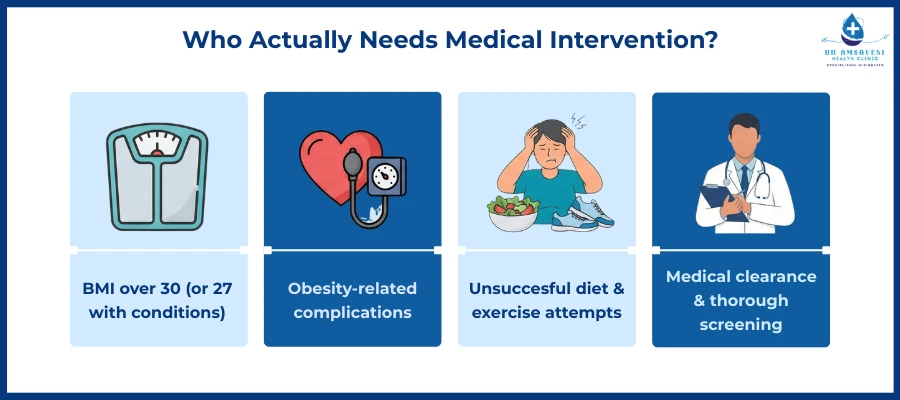
Who needs weight loss injection? This is determined through medical evaluation. Candidates typically include people with:
- BMI over 30 (or 27 with health conditions)
- Obesity-related complications like diabetes or high blood pressure
- Unsuccessful attempts with diet and exercise alone
- Medical clearance after thorough health screening
Multiple appointments are attended before medication is prescribed. Your complete health history is reviewed, blood tests are done, and potential risks are discussed openly.
Weight Loss Medication Without Side Effects: Does It Exist?
The honest answer: weight loss medication without side effects doesn’t truly exist. Every medication carries potential side effects, though severity and occurrence vary among individuals.
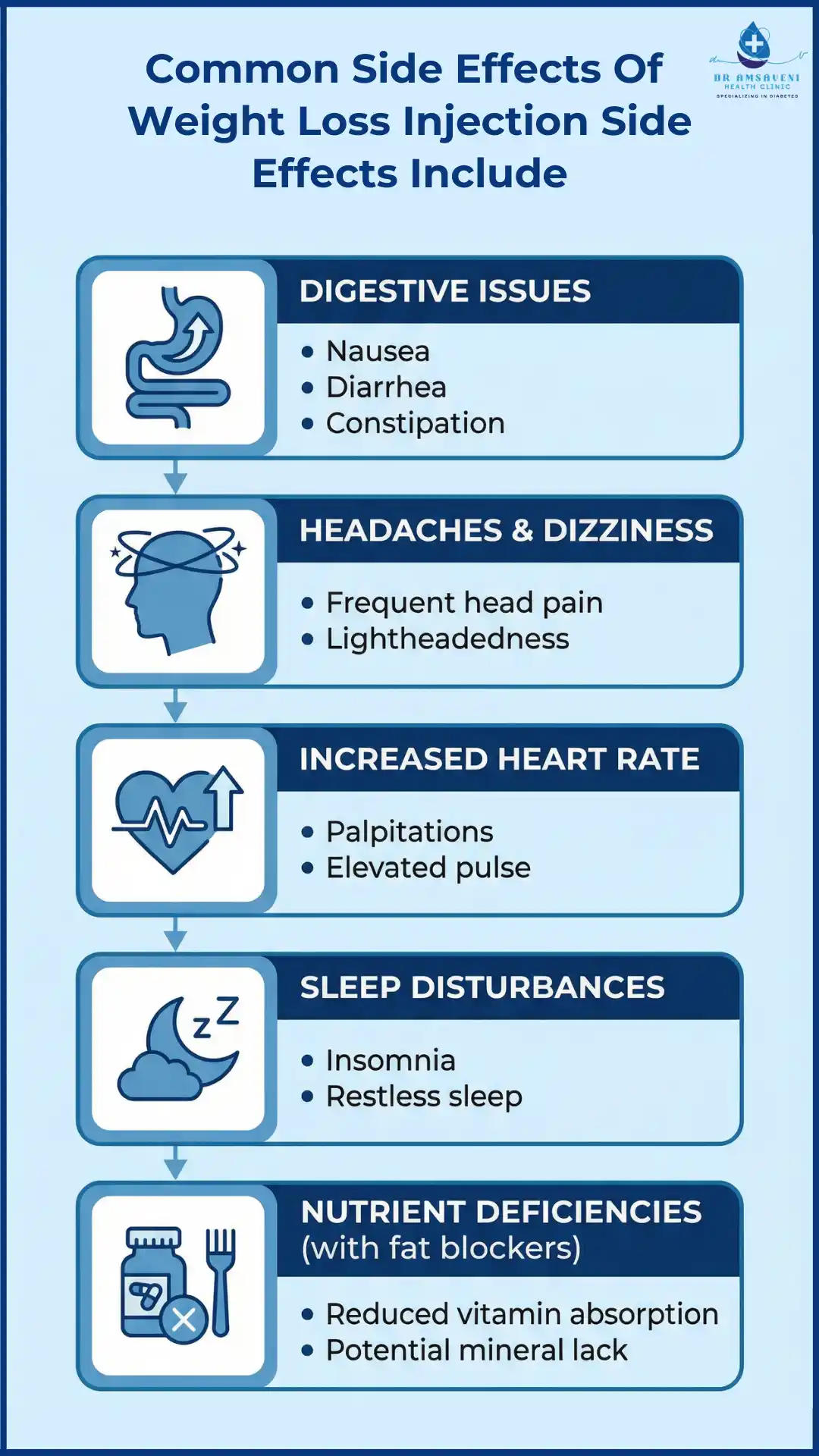
Common Side Effects Of Weight Loss Injection Side Effects Include:
- Digestive issues (nausea, diarrhea, constipation)
- Headaches and dizziness
- Increased heart rate
- Sleep disturbances
- Nutrient deficiencies with fat blockers
Weight loss injection side effects may include injection site reactions, gastrointestinal discomfort, and in rare cases, pancreatitis or thyroid concerns. The key is medical supervision. Doctors prescribe these medications only when benefits outweigh risks for your specific situation.
Understanding Your Options
Many people worry about side effects from weight loss injections. The truth is, doctors thoroughly examine patients across multiple consultations before prescribing any medication. They assess whether your body will respond positively and if medication is medically necessary for your situation. Important reality: Medication is a support tool, not a magic solution. Even with weight loss treatment, you still need proper diet and light exercise for effective results. The injection regulates hormones but doesn’t directly burn fat, it works best when combined with lifestyle changes.
The Long-Term Perspective
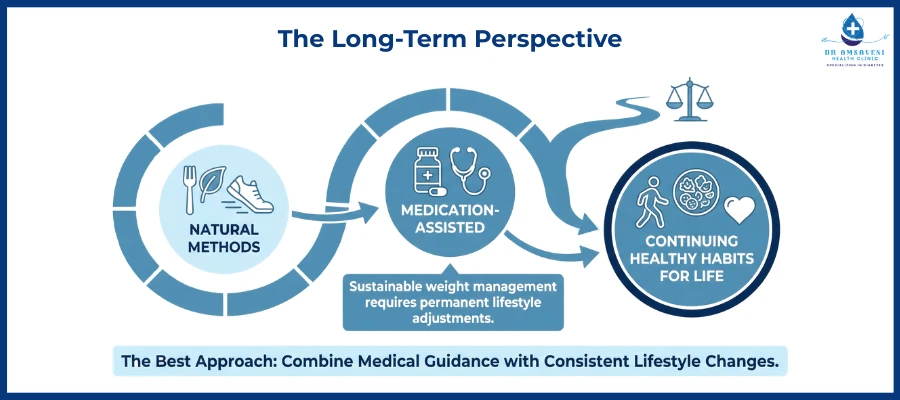
Whether you choose natural methods or medication-assisted weight loss, maintaining your results requires permanent lifestyle adjustments. If you lose weight with injections but return to old habits, the weight will return. Sustainable weight management means continuing healthy eating and exercise habits for life. The bottom line: Natural weight loss through diet and exercise remains the gold standard for most people. Medication becomes valuable when prescribed by doctors for specific medical conditions. The best approach combines medical guidance with consistent lifestyle changes.
Ready to start your weight loss journey safely? Consult with healthcare professionals who can create a personalized plan based on your unique health needs and goals.
Frequently Asked Questions
Yes, FDA-approved weight loss pills work when combined with diet and exercise. Clinical studies show medications like Orlistat, Qsymia, and Contrave produce 5-20% body weight reduction. However, effectiveness depends on combining medication with lifestyle changes pills alone without dietary improvements and physical activity produce minimal lasting results.
Common side effects include digestive changes (nausea, diarrhea, constipation), headaches, and reduced appetite. Most side effects are temporary and improve within weeks. Weight loss injection side effects may include injection site reactions and gastrointestinal discomfort. Serious complications are rare but require medical monitoring, which is why regular doctor visits are essential during treatment.
Why Some People Need Medical Help
Weight loss is achieved differently by different bodies. Your neighbor might drop 15 kilos just by cutting rice portions and walking daily. But for you? The scale barely moves despite doing everything "right." This frustration is felt by millions, and it's not about lacking willpower. Sometimes, medical conditions interfere with natural weight loss. Hormonal imbalances, insulin resistance, or genetic factors can make traditional methods feel impossible. This is where weight loss medication pills and injections are being prescribed by doctors as legitimate medical tools. The question "is weight loss treatment safe" is asked frequently, and it should be. Your health deserves careful consideration. Safety is determined through proper medical evaluation, not by what's read on social media or heard from friends.
How Modern Medications Are Changing Lives
Weight loss medication injection options like Monjaro and similar treatments are being talked about everywhere these days. Even weight loss medication Reddit communities are filled with success stories. But how do these actually work? These medications are designed to work with your body's natural hunger hormones. Appetite is controlled, portions are reduced naturally, and cravings are managed without that constant feeling of deprivation. It's not magic, it's science working with your biology.
Different Types Are Available Depending On Your Needs:
Tablets and pills like Orlistat are taken orally and work in your digestive system. Fat absorption is blocked, which means fewer calories are absorbed from your meals. This option is preferred by people who want to avoid injections. Injectable medications are administered weekly or monthly. Hormones that control hunger and blood sugar are mimicked, helping your body feel satisfied with smaller portions. These are being used successfully by people who haven't responded to pills or natural methods alone. The reality about weight loss medication without side effects needs to be understood clearly. Such a thing doesn't exist. Every medication comes with potential side effects. However, these effects are monitored closely by your doctor, and decisions are made based on whether benefits outweigh risks for your specific situation.
What's Available in Your Area
Weight loss medication in India is becoming more accessible, though costs can be significant for newer options. Consultations with endocrinologists or obesity specialists are recommended before any medication is started. The strongest weight loss prescription pill varies by individual response. What works powerfully for one person might be less effective for another. This is why personalized medical evaluation is so important because your body's unique chemistry is considered.
Understanding the Side Effects Reality
Let's be honest about side effects of weight loss pills and injections. Digestive changes are experienced by most people initially, nausea, bathroom habit changes, reduced appetite. These symptoms are usually temporary and improve within weeks. Weight loss injection side effect experiences are shared widely online, but context matters. Serious complications are rare when proper medical supervision is followed. Regular check-ups are scheduled to monitor your response and catch any problems early. The question "are weight loss pills safe" can be answered with: Yes, when prescribed appropriately and monitored properly. Dangerous situations are avoided through comprehensive health screenings before medication is ever prescribed.
Real Talk: What Actually Works
Weight loss pills that actually work do exist FDA-approved options have been tested rigorously. But effectiveness is determined by combining medication with lifestyle changes, not relying on pills alone. Most effective weight loss pills show results of 10-20% body weight reduction when diet and exercise are included. Without lifestyle changes, results are minimal and temporary. Weight loss pills over the counter are marketed heavily, but caution is advised. Regulation is less strict, effectiveness is often questionable, and safety concerns exist. Prescription medications are recommended because they're tested thoroughly and monitored by healthcare professionals.
Natural Methods vs Medical Support: The Truth
Natural vs medication for weight loss isn't really a competition, it's about finding what works for your body and situation. Natural methods through diet and exercise are tried first by most people, and they work beautifully for many. But when natural approaches aren't producing results despite consistent effort, or when health complications are present, medication becomes a valuable tool. This decision is made collaboratively with your doctor, not randomly.
Who Actually Needs Medical Intervention?
Who needs weight loss injection? This is determined through medical evaluation. Candidates typically include people with: BMI over 30 (or 27 with health conditions) Obesity-related complications like diabetes or high blood pressure Unsuccessful attempts with diet and exercise alone Medical clearance after thorough health screening Multiple appointments are attended before medication is prescribed. Your complete health history is reviewed, blood tests are done, and potential risks are discussed openly.
The Long-Term Reality Nobody Talks About
Here's what needs to be understood: medication helps you lose weight, but maintenance requires permanent lifestyle changes. Weight is regained by most people after stopping medication unless new healthy habits are established. The effective approach combines medical support (when needed) with: Sustainable eating patterns that can be followed lifelong Regular physical activity you actually enjoy Behavioral changes addressing emotional eating Ongoing support and accountability Weight loss isn't just about reaching a number, it's about creating a healthier life that can be maintained. Whether medication is used or not, success is built on consistent healthy choices over time. The injection or pill provides support and makes the journey easier, but the real work of choosing nutritious foods, moving your body, managing stress still needs to be done by you. This combination approach is where lasting transformation is created. The bottom line? Weight loss is possible through various methods. Natural approaches work wonderfully for many. Medication provides valuable support when medically appropriate. The best results are achieved when medical guidance, lifestyle changes, and realistic expectations are combined together. Your journey is unique. What works for others might not work for you, and that's okay. The right approach is the one that's safe, sustainable, and supports your overall health, not just the number on the scale.