Why Personal Hygiene Practices Matters
Personal hygiene practices are the foundation of a healthy lifestyle. They help prevent infections, boost confidence, and support long-term wellbeing. Whether you’re a student, homemaker, or food handler, maintaining proper hygiene is essential. This blog offers 10 practical hygiene tips, including how often to change your toothbrush, how to maintain underwear hygiene, and why trimming nails regularly matters. We also include a hygiene checklist to help you build daily habits that keep your body clean and your home safe. These tips are designed to meet the needs of kids, students, women, and anyone looking to improve their health and hygiene routines.
Everyday Personal Hygiene Habits
1. Change Your Toothbrush Every 3 Months or Sooner If You’re Sick
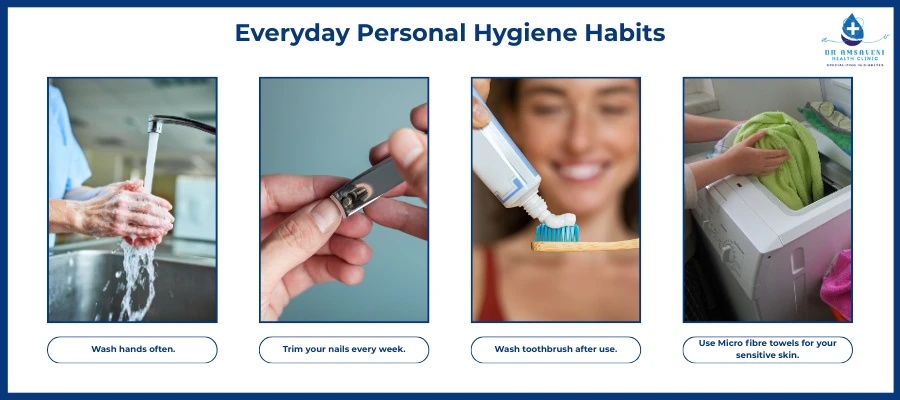
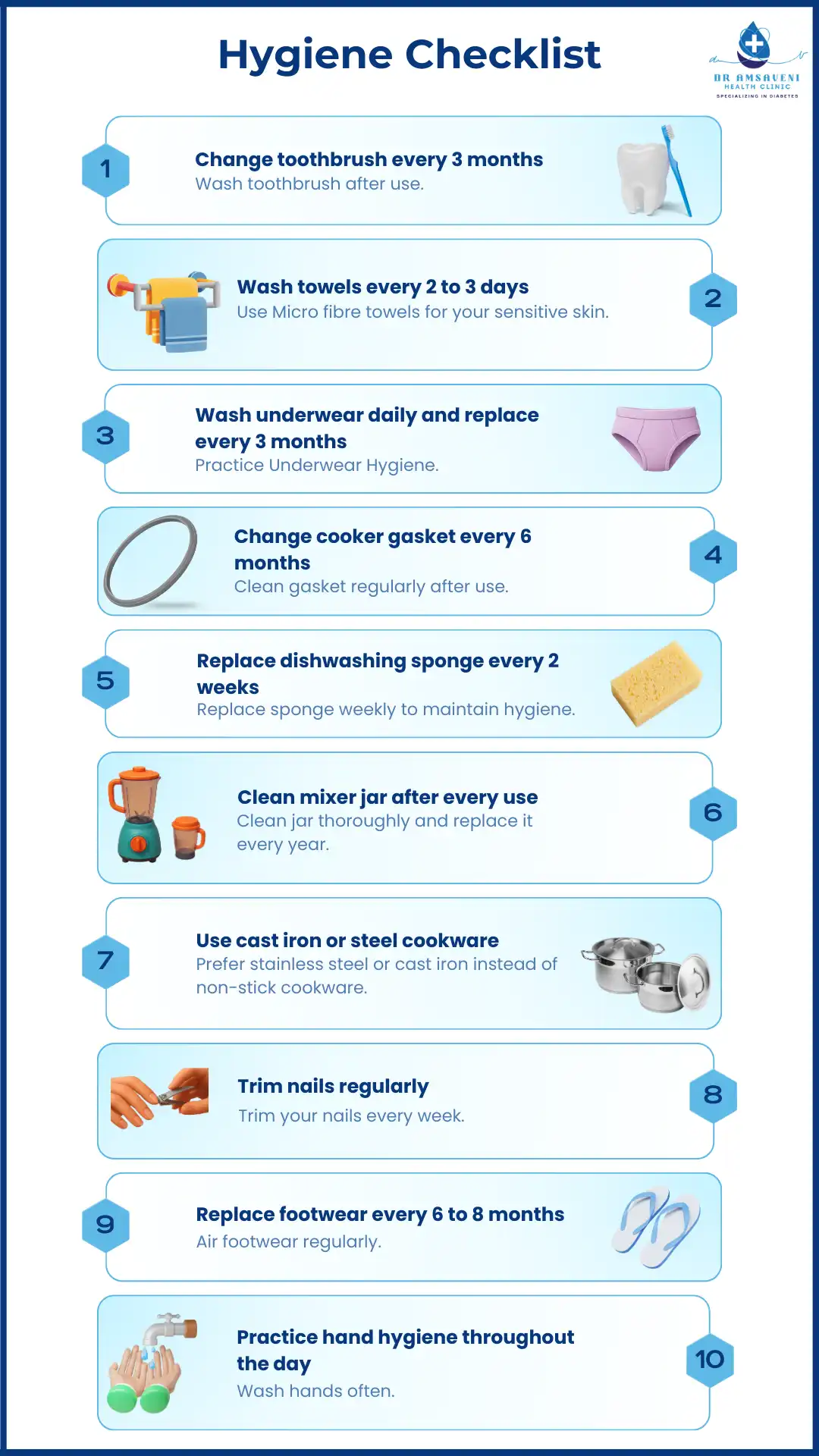
One of the most overlooked personal hygiene practices is how often to change your toothbrush. Dentists recommend replacing it every 3 months, but many people prefer to change toothbrush every month for extra freshness. If you’ve had a cold, strep throat, or taken antibiotics, it’s important to change toothbrush after sick to avoid reinfection. This applies to both manual and electric brushes, so remember to change toothbrush head regularly. Search trends like “change toothbrush how often” and “electric toothbrush head replacement time” show growing awareness. Don’t wait until the bristles fray your oral hygiene depends on it.
2. Practice Underwear Hygiene and Replace Innerwear Every 3 Months
Underwear hygiene is essential for comfort and skin health. Whether you’re choosing underwear hygiene for women or men, opt for breathable cotton fabrics and wash them after every wear. Replace innerwear every 3 months to prevent irritation and bacterial buildup. For women, consider feminine hygiene underwear or period underwear hygiene for added protection. Frequent queries like “should I wash my underwear everyday” and “how to get your underwear really clean” reflect common concerns. Best underwear for hygiene includes cotton, moisture-wicking, and odor-resistant options. This habit belongs in every hygiene checklist for students and adults.
3. Trim Nails Regularly to Prevent Germ Build-Up
Trimming nails regularly is a simple but powerful hygiene tip. Long nails trap dirt and bacteria, increasing the risk of infections. Experts recommend trimming nails weekly and cleaning underneath. This is especially important for food handlers and kids. The 4 benefits of trimming nails include better hand hygiene, reduced illness, improved appearance, and safer cooking. Nail care is often listed in personal hygiene practices for women and students. Add it to your hygiene checklist and make it a weekly ritual.
4. Wash Towels Every 2 to 3 Days and Replace Every 6 Months
Towels absorb sweat, moisture, and dead skin cells, making them a breeding ground for bacteria. Wash towels every 2 to 3 days and replace them every 6 months. This tip is essential for anyone building a hygiene checklist for adults or teens. If your towel smells musty or feels rough, it’s time for a new one. Good hygiene practices for women often include towel care, especially during menstruation or workouts. Clean towels support skin health and reduce the risk of fungal infections.
5. Replace Footwear Every 6 to 8 Months for Better Posture and Hygiene
Underwear hygiene is essential for comfort and skin health. Whether you’re choosing underwear hygiene for women or men, opt for breathable cotton fabrics and wash them after every wear. Replace innerwear every 3 months to prevent irritation and bacterial buildup. For women, consider feminine hygiene underwear or period underwear hygiene for added protection. Frequent queries like “should I wash my underwear everyday” and “how to get your underwear really clean” reflect common concerns. Best underwear for hygiene includes cotton, moisture-wicking, and odor-resistant options. This habit belongs in every hygiene checklist for students and adults.
6. Practice Hand Hygiene Throughout the Day
Hand hygiene is one of the most effective ways to prevent illness. Wash hands with soap and water for at least 20 seconds, especially before meals, after using the toilet, and after touching public surfaces. Keep a sanitizer handy. Frequent queries like “good hygiene practices for women” and “hygiene checklist for kids” reflect its importance. Clean under nails and between fingers. Teach children proper handwashing techniques early. Regular hand hygiene reduces the spread of viruses, bacteria, and foodborne illnesses.
Kitchen & Household Hygiene Practices
7. Change Cooker Gasket Every 6 Months for Safe Cooking
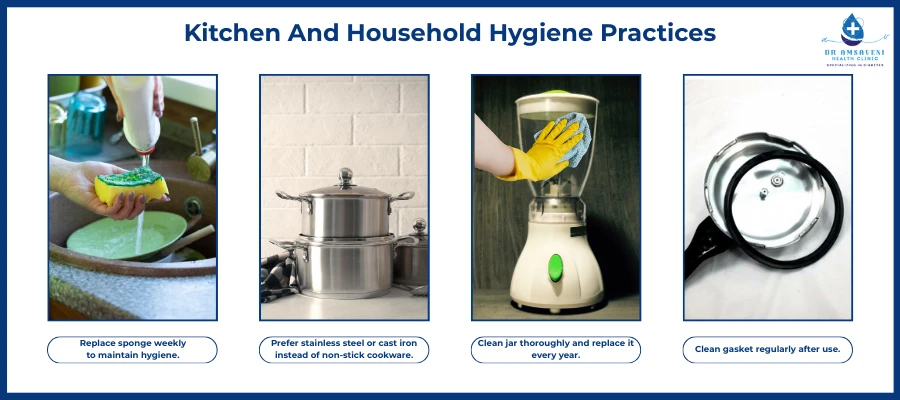
Kitchen hygiene is part of household hygiene. One item often ignored is the pressure cooker gasket. Over time, it wears out and may cause steam leaks. Change cooker gasket every 6 months to maintain safety and performance. Search terms like “when to change pressure cooker gasket” and “is aluminium cooker bad for health” show rising concern. Switch from aluminum to stainless steel or cast iron cookware. Wondering which cooker is better steel or aluminium? Steel is safer, more durable, and better for long-term health.
8. Replace Dishwashing Sponge Every 2 Weeks
Your dishwashing sponge may look clean, but it’s likely full of bacteria. Replace it every 2 weeks or sooner if it smells or breaks apart. This tip is often included in hygiene practices for cooking and kitchen checklists. Consider switching to silicone scrubbers that dry faster. Queries like “how often to replace kitchen sponge” and “sponge replacement hygiene” reflect growing awareness. A clean sponge ensures your utensils and your meals stay safe.
9. Clean Mixer Jar After Every Use and Replace Yearly
Mixer jar cleaning is often skipped, but food residue around the blades can lead to contamination. Clean it thoroughly after each use and replace the jar yearly. This tip is part of personal hygiene practices in the kitchen and supports household hygiene. Use specialized brushes to clean under the blades and rubber seals. A well-maintained mixer keeps your meals clean and your kitchen organized. Hygiene checklist for food handlers often includes appliance care.
10. Use Cast Iron or Steel Instead of Aluminium Cookware
Cookware matters. Non-stick coatings can degrade, and aluminum may leach into food. That’s why cookware safety tips now recommend switching to cast iron or stainless steel. Search trends like “aluminum cooking pans good or bad” and “aluminium rice cooker good or bad” show increased concern. Is aluminium cooker bad for health? Studies suggest it’s best to avoid it. Cooking in safe vessels is a long-term investment in your wellbeing and a key part of household hygiene.
Small Habits Big Impact
Good hygiene habits aren’t just about looking clean they’re about feeling confident staying healthy and respecting your body. By following these 10 personal hygiene practices and using the hygiene checklist pdf you can build a routine that protects you from infections supports household hygiene and improves your quality of life. Whether it’s toothbrush replacement time underwear hygiene for women or cookware safety tips every small change adds up. Start with one habit today and build from there. Your health is your responsibility and your greatest asset. Stay clean stay safe and stay smart.